How Old Do I Look? What AI Age Estimates Can’t Tell You

An age estimation model never sees your birthday. It sees a face and returns a number near the middle of the range it finds plausible. That distinction explains most of what follows, including why two sites can disagree by five years about the same photograph taken on the same afternoon.
Upload a selfie to two of these tools and you might get 27 from one and 31 from the other, with the same hair and the same window light. Neither answer is a measurement of something written down anywhere. Both are guesses built from photographs of other people, and the gap between them is the most honest part of the exercise.
What the model is looking at
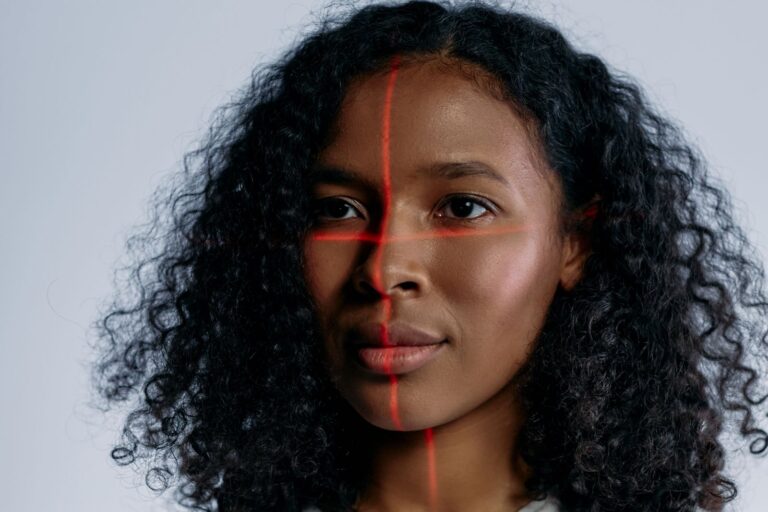
The first step is detection: a network finds the face in the frame and places landmarks at the eyes, the nose and the corners of the mouth. The crop is then rotated and scaled so that every face reaches the next stage in roughly the same pose, a process called alignment. Only after that does the age model get a look at what remains.
What it reads is a mix of texture and shape. Fine lines around the eyes, evenness of skin tone, pore visibility, the position of the hairline and the volume of the jaw all carry signal, and so does the way light falls across a cheek. The network compresses those cues into a long list of numbers, then maps that list onto the ages it saw during training.
Two things can go wrong before age is considered at all. If the frame holds two faces, the tool may average them or quietly pick the larger one; if it holds none, some sites return a default that looks like a result. A cropped forehead or a hand across the chin removes the cues the model needs.
Why a single number is the wrong output
A well-built model outputs a spread of ages rather than one figure, and the site you use usually shows the peak or the midpoint of that spread. A result of 34 often stands for something closer to “most likely between 29 and 41”. A point estimate with no range is a design decision, not a fact about your face.
Even good models miss by several years on individual faces, and the errors are not scattered at random. Predictions get pulled toward the middle of the age range, so a 20-year-old tends to come out older and a 60-year-old younger. Statisticians call it regression to the mean. You will experience it as flattery in one direction and insult in the other, from the same app.
Where the guess goes wrong
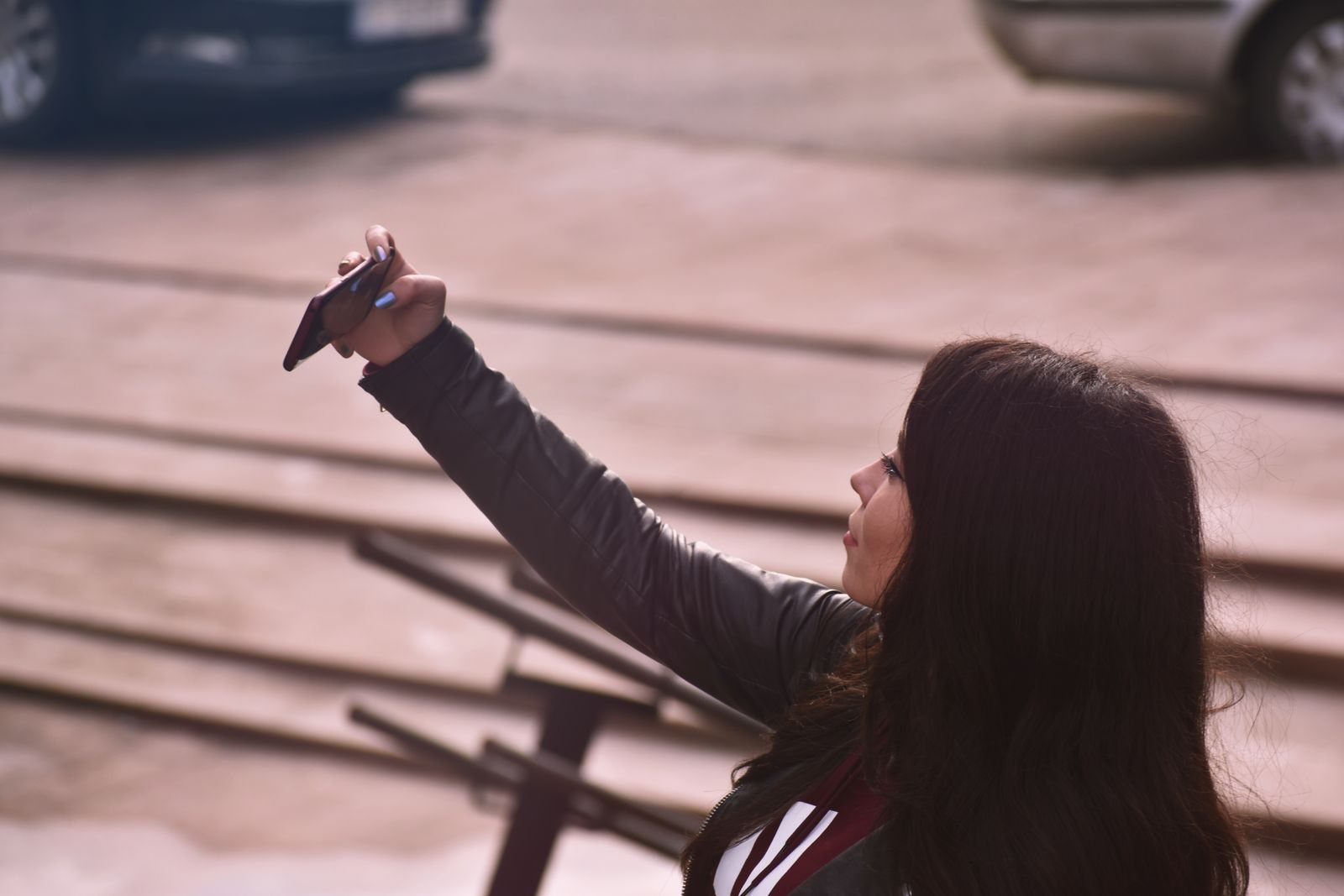
Light is the largest confounder. Hard overhead light deepens the shadows under the eyes and beside the nose, which reads as age. A wide-angle phone lens held close enlarges the nose and narrows the jaw, changing the proportions the model relies on. Low angles suggest jowls, a hat hides the hairline, and glasses break up the eye region that carries a lot of the signal.
Filters and makeup go further, softening exactly the texture the model treats as evidence. Training data matters as well: where a model saw few faces of your age, sex or skin tone, its guess rests on a thinner sample. NIST runs independent evaluations of face analysis technology, including an age estimation track, because performance can differ between demographic groups even when average accuracy looks strong.
Resolution matters more than people expect. A photo sent through a messaging app is compressed, and the fine texture that carries age information is among the first things to go. That is one reason a sharp photograph and a forwarded screenshot of the same face can produce answers years apart.
What the result is and is not
It is not identification. A face estimate cannot verify who you are, which is why systems built for age assurance pair estimation with liveness checks, thresholds and human review rather than trusting a raw number. It is not a medical test either. Apparent age reflects sun exposure, sleep, smoking and genetics, but a figure from a photo says nothing diagnostic about any of them.
Regulators treat the difference as important. The European Union’s AI Act sorts systems by risk and singles out some biometric uses for stricter treatment, while leaving entertainment uses largely alone. The practical version for a reader is simple: a novelty result is harmless, and a decision about your access to a service is not something a photograph can settle.
Presentation does part of the persuading. A number in a large font, with a percentage beside it, looks like a measurement, and the interface rarely shows the error bars. Read the figure as a range and it stops feeling like a verdict.
Reading your result without over-reading it
Treat the output as a wide range, then test it against a second photo before you believe anything about it.
- Run two or three photos taken in different light and see how far apart the numbers land. A ten-year spread says more about the photographs than about you.
- Look for a stated range. If the site shows one number only, add and subtract a few years before you repeat it to anyone.
- Compare like with like. A shot with a beard, glasses or a filter is not comparable to one without.
- Ignore single-year precision. A result of 34 does not mean you look 34 rather than 35.
- Keep it away from medical decisions, identity checks and questions about a legal age.
A cleaner test: upload a plain photo taken in daylight at eye level, then one taken indoors at night, and compare the two answers. The distance between them is the model’s uncertainty made visible, and it is usually wider than the distance between you and the number on the screen.
It helps to know your baseline. The age calculator gives your completed age in years and days from a birth date. The how old do I look tool returns the photo estimate you can compare against it.
FAQ
How accurate is AI age estimation?
For a single face, expect an error of a few years even from a good model, and more when the photo is poor. Accuracy figures quoted for a system are averages across a test set, not a promise about your picture.
Can it tell my exact age?
No. A photograph carries appearance, not a birth record. The model estimates how old you look to a pattern it learned, which is a different quantity from the date on your passport.
Why do two sites give different answers?
Different training data, different image handling and different ways of turning a spread into a single number. A site that reports the midpoint and a site that reports the most likely age will disagree even when both models work as intended.
Does looking older than my age mean anything about my health?
Not from a photo. Appearance is shaped by sun, sleep, smoking, genetics and camera conditions. If you are worried about how your skin or face is changing, ask a clinician rather than an app.
Last updated: October 26, 2026. This article is for general information only and is not medical, veterinary or legal advice. For decisions about your own health, your pet, or a legal matter, consult a qualified professional.
Sources
- National Institute of Standards and Technology, Face Technology Evaluations: FRTE and FATE: nist.gov
- European Commission, AI Act: ec.europa.eu