Why AI Age Guesses Miss: Light, Angles, and Filters
Two photographs of the same face, taken twenty minutes apart, can come back as 31 and 41. The face did not change. The light did, and so did the distance to the lens. An age estimator reads a photograph rather than a person, and a photograph is a set of decisions about light, angle, and framing that someone made, usually without noticing.
A bathroom selfie under a downlight is the clearest case. Light falls from above, so the eye sockets go dark, the fold from nose to mouth deepens, and the jaw picks up a shadow that was not there at noon. Send that frame to a model trained on portraits and it will often answer with an age several years above the one it gives the same person standing at a window. The reasons are ordinary, and worth knowing before you read anything into a number.
What the model is looking at
An age estimator does not know your birthday. It measures the surface of a face and compares that surface with patterns learned from labelled photographs. The cues it uses are the ones photographers have always used to make someone look older or younger: fine lines around the eyes, the depth of the fold beside the mouth, the fullness of the cheek, the density of the eyebrows, the height of the hairline, and the way skin reflects light.
None of those cues is a fixed property of a person. Skin reflects light differently when it is dry, warm, or covered in foundation. A crease that disappears in soft light becomes a groove under a hard one. So the model is not contradicting itself when it returns two answers; it is answering two different questions about two different images. What it never sees is your medical history, your sleep, or your habits. It sees how old one frame of you looks, which is a photographic effect as much as a physical fact.
Hard light adds years, soft light removes them
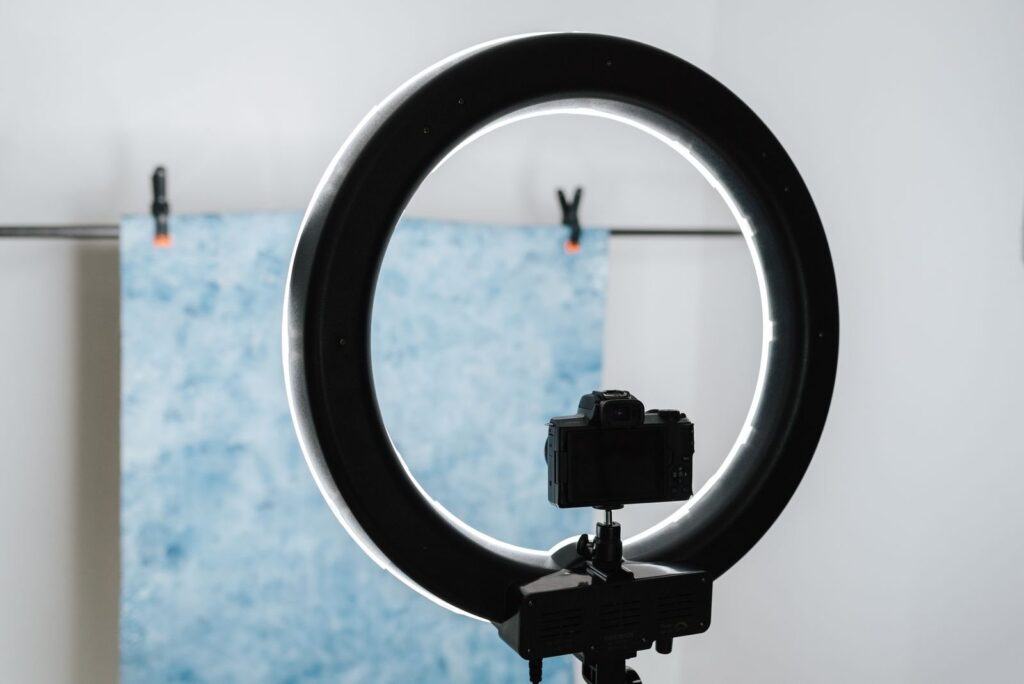
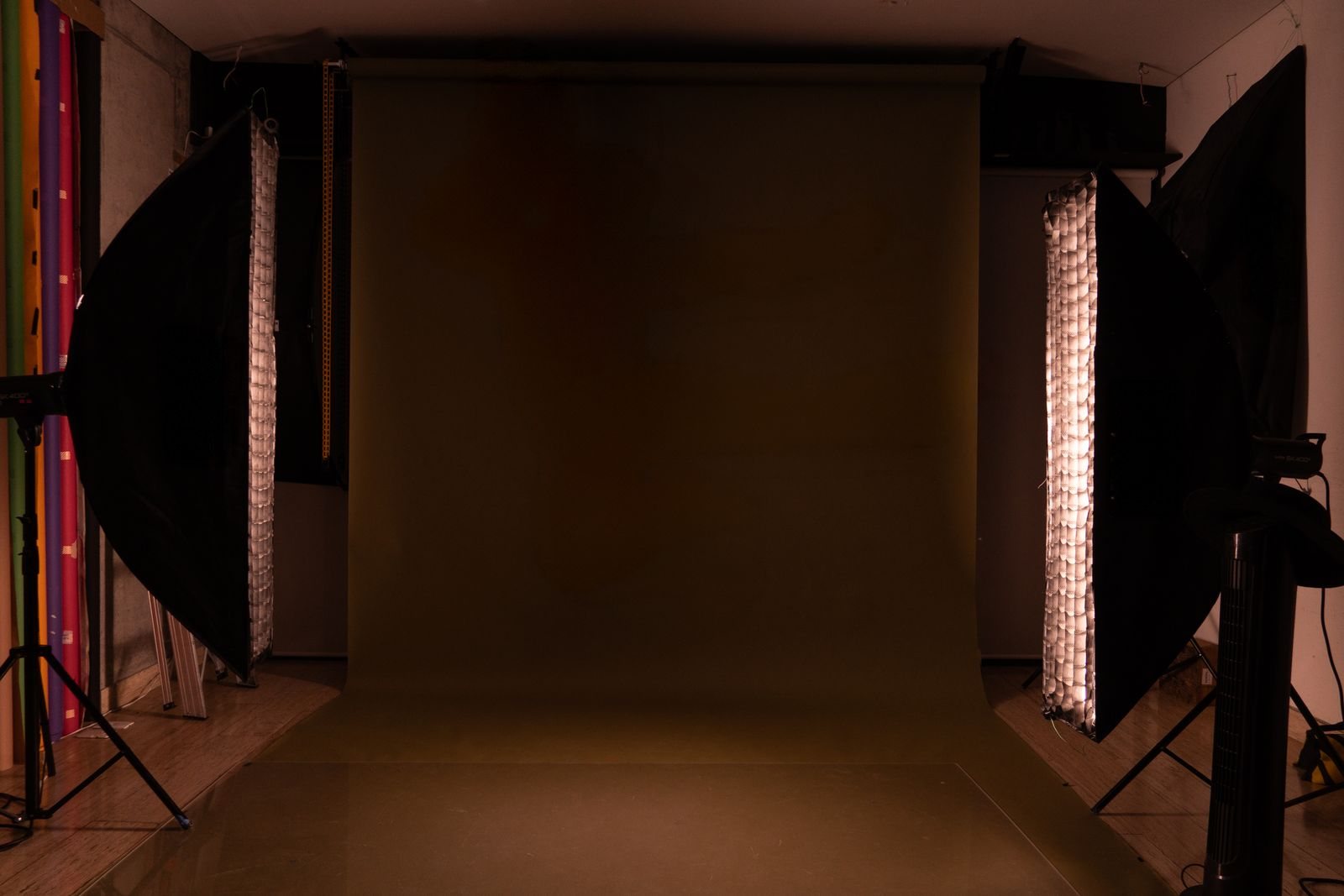
The biggest single variable is the size of the light source relative to your face. A small, bright source, such as a phone flash or a recessed ceiling downlight, throws short, hard shadows. Every crease gets a dark edge and a bright edge, which is exactly the contrast the eye reads as texture. A large source, such as an overcast sky or a window out of direct sun, wraps light around the face and fills the shadows. The same skin then looks smoother, and the estimate often drops.
Direction matters as much as size. Light from the side rakes across the cheek and temple and exaggerates every bump. Light straight on flattens the face and hides the depth cues that suggest age. Light from behind leaves the face underexposed, so the camera raises sensitivity, adds noise, and smears fine detail. Midday sun outdoors is the worst combination for most people: a small effective source, high contrast, and a hard shadow under the brow and nose.
Angle, lens, and distance reshape the face
A phone held at arm’s length uses a wide lens, and wide lenses distort whatever is close to them. Hold the phone 30 centimetres from your face and your nose grows, your midface stretches, and your ears slide toward the edge of the frame. Hold it at 1.5 metres with the same framing and the proportions settle down. Same face, different geometry.
That matters because cheek volume, jaw width, and the balance between forehead and lower face are age cues. A low camera angle adds chin and neck, which reads heavier and usually older. A high angle enlarges the forehead and eyes, shrinks the jaw, and reads younger. Tilting the head moves every shadow. Alignment software can rotate a face back to a standard pose, but rotation cannot undo perspective.
Resolution sets a floor on what can be seen. If the face is a small patch inside a group photo, there may be too few pixels left to describe texture, and the model falls back on outline and colour. That is why results from old, cropped, or forwarded pictures wobble more than results from a fresh portrait.
Filters, makeup, glasses, and compression
Beauty filters are built to do the opposite of ageing. They smooth texture, lift the cheek, widen the eyes, and narrow the jaw, then hand the model an image in which most of the evidence has been painted out. The number does not fall because you look younger; it falls because there is less to read. Makeup works the same way at lower strength, since concealer under the eyes removes the shadow that reads as tiredness and foundation evens the tone.
Facial hair is less predictable. A full beard covers the jaw and mouth area, so it can hide sagging, but it also darkens the lower face and may add years depending on how the training photos were labelled. Glasses put frames across the eye area, glare on the lenses hides the eye itself, and sunglasses remove one of the strongest cues available. A hat hides the hairline, which carries more weight than most people expect.
Compression is the quiet one. A heavily compressed image loses fine detail first, and fine detail is what describes skin. Night modes that blend frames and smooth noise do something similar. Old scans of prints add colour casts and blur on top of that. Two pictures of one face can therefore differ by a decade without a single dishonest element in either.
How to read a number you do not trust
Treat the output as the middle of a range, not as a measurement. When a tool gives a band instead of a single figure, the band is the honest part. When it gives a decimal, ignore the decimal, because it implies a precision the method does not have.
- Take two photos in the same session with one variable changed, then compare the spread rather than the average.
- Change light first, then distance, then expression. Whichever shift moves the number most is what the model is really reading.
- Ignore differences of a year or two, and ignore any single outlier.
- Keep the photo recent. A picture from five years ago should be read as five years younger, and it says nothing about today.
For a second opinion on the same file, the site’s how old do I look page will give you another reading to compare against. For your actual age in years, months, and days, the age calculator does the arithmetic properly, which is a different question with an exact answer.
What none of this tells you is anything about your health, your habits, or how strangers see you in a room. A model trained on portraits and fed a bathroom selfie is describing the selfie. That is worth remembering the next time a number arrives with an air of authority.
FAQ
Why do two sites give different ages for the same photo?
Different training sets, different labelling rules, and different targets. One model may predict how old a face looks to human raters; another may predict a documented birth date.
Does a younger estimate mean I look younger than I am?
It means that image, in that light, with that framing, produced a lower number. Other photos will produce other numbers. Take a few in different conditions and look at the range instead of any single figure.
Can glasses, a beard, or a hat really shift the result by years?
Yes, usually by hiding rather than revealing. Each item covers a region the model uses, so it leans on the remaining cues, which may point somewhere else. The effect is largest when the item is rare in the training data.
Is there one photo that always gives the right answer?
No. A neutral, evenly lit portrait at eye level gives the most stable reading, and stable is the best available outcome. Age estimation compares a face with a learned pattern; it does not measure time.
Last updated: October 26, 2026. This article is for general information only and is not medical, veterinary or legal advice. For decisions about your own health, your pet, or a legal matter, consult a qualified professional.
Sources
- National Institute of Standards and Technology, Face Recognition Vendor Test (FRVT): nist.gov