How to Tell a Dog’s Age From a Photo: Visible Clues
A photo can tell you whether a dog is a puppy, a teenager or an old animal, and it rarely does better than that. Grey muzzles, cloudy eyes and slack muscle are real signals, but every one of them depends on coat colour, breed and light. The most careful reading produces a range of a few years; a vet with the same dog in the room can usually narrow it further in one appointment.
That range is still worth having. Shelters, rescues and anyone who takes in a stray need a working age to plan food, exercise and check-ups, and a rough bracket does that job. The mistake is treating a photo estimate as a birth date, then building a vaccination schedule on it.
What a Photo Genuinely Shows
Age appears in a handful of places, and photographers notice the same ones vets do. The muzzle and chin grey first on most dogs, then the eyebrows and the fur around the ears. The coat loses some shine and thickness. Muscle along the spine and over the hips thins out, which changes the outline more than the face does.
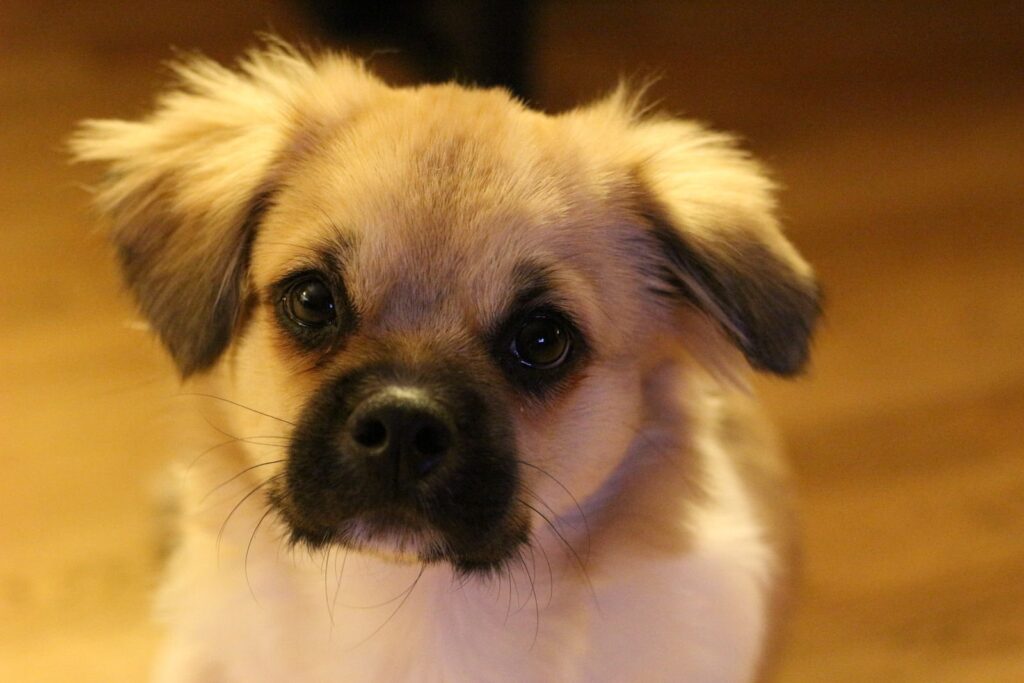
The eyes carry a separate clue. Many older dogs develop a bluish haze in the lens, a change called lenticular sclerosis that a flash photograph often catches. It is not the same thing as a cataract, and only a vet can tell the two apart. Puppies, meanwhile, look unfinished: oversized paws, a domed head, a soft coat, and joints that seem to work faster than the legs can follow.
Posture and expression finish the picture. Young dogs hold themselves square and move in bursts. Old dogs shift weight forward, sit with the hind legs tucked, and carry the head a little lower.
What the Camera Hides
Light direction matters as much as light quantity. Flat, overcast light shows texture and muscle definition; hard midday sun drops shadows under the eyes and along the ribs that read as hollows. Photograph the same dog at noon and again at dusk and you may find yourself describing two different animals.
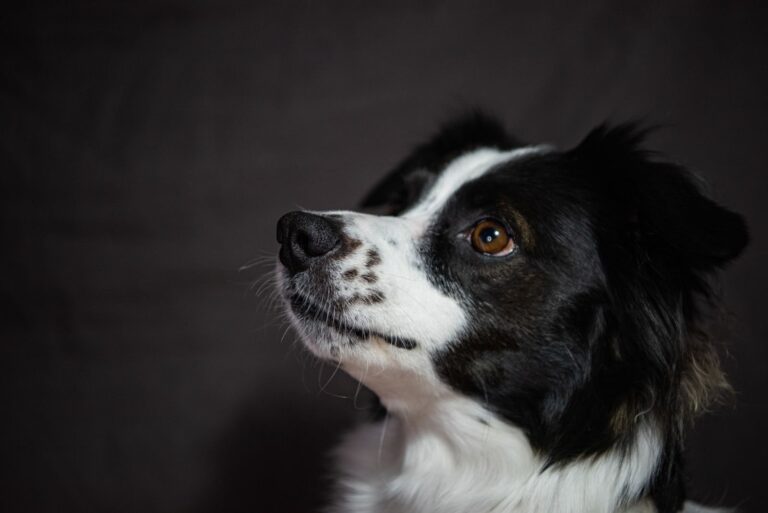
Coat colour defeats the grey-muzzle test before it starts. A black Labrador can reach ten with no visible grey, while a cream retriever can look faded at four. Strong sun bleaches fur and washes out detail, and a phone’s portrait mode smooths exactly the texture you are trying to read.
Body condition cuts both ways. A lean dog shows muscle loss clearly; a fat dog hides it under padding, so an overweight six-year-old can read as a healthy four-year-old. Grooming does the same. A freshly clipped terrier looks years younger than the same dog three months on.
Breed and size set the baseline. A Great Dane at seven is old; a Jack Russell at seven is middle-aged. An estimate that ignores the dog’s build is guessing at the wrong animal. Wide-angle phone lenses stretch whatever sits closest to the glass, which is why a puppy photographed from above can look like a small adult.

Four Life Stages Give You a Frame
Veterinary practice measures dog age in stages as much as in years. The 2019 AAHA Canine Life Stage Guidelines divide a dog’s life into four: puppy, from birth to the end of rapid growth at six to nine months; young adult, from there to about three or four years; mature adult, up to the start of the last quarter of expected lifespan; and senior, through that final quarter.
| Stage | Age window | What shows in a photo |
|---|---|---|
| Puppy | Birth to 6–9 months | Oversized paws, soft coat, domed head |
| Young adult | 6–9 months to 3–4 years | Full size, hard muscle, no grey |
| Mature adult | 3–4 years to the final quarter of lifespan | Some greying, weight creep |
| Senior | Final quarter of lifespan | Muscle loss, cloudy eyes, stiffer posture |
The useful part is that last definition. Because the senior stage begins at the final quarter of expected lifespan, the threshold moves with size and breed instead of sitting at a fixed number. A giant breed may be senior at six or seven; a small terrier may not be senior until eleven or twelve. A grey face on a large dog therefore says something different from a grey face on a small one.
Puppy and adolescent cues are easier to read than senior ones. A dog still filling out, with a narrow chest and knobbly joints, is under two. A dog with a broad chest, settled muscle and an even gait has finished growing, which puts it past roughly eighteen months to two years depending on size.
How to Take a Photo You Can Actually Read
If you are the one holding the phone, a few choices matter more than any app.
- Stand the dog side-on in daylight, with the sun behind you.
- Take one head-and-shoulders shot at the dog’s eye level.
- Take one full-body standing shot that includes the feet.
- Turn off filters and portrait mode so the fur stays sharp.
- Put a familiar object in the frame for scale, such as a standard door.
- Photograph before a groom rather than after.
Two shots beat one because they answer different questions. The head shot reads the face; the standing shot reads muscle, weight and posture. Both should be recent, ideally from the same week you need the estimate, since a dog can lose a lot of muscle during a few months of illness or short walks. If you want a second reading, put the same files through a dog age from photo tool and compare its range with your own notes.
Then compare honestly. Write down the range each feature suggests and see whether they agree. When the muzzle says eight and the muscle says twelve, the dog is probably somewhere between, and a second set of photos taken six months later will show which way it is heading.
Where a Photo Estimate Stops Being Useful
Photographs cannot show dental wear, which is one of the most reliable age markers a vet has. They cannot show the changes inside the lens, the state of the undercoat, or the bloodwork that says more about health than age does. A dog that looks old in a picture may be young and ill; a dog that looks young may be old and lucky.
For a rescue dog with no history, an appointment with a dental check and a body condition score will produce a better estimate than any number of photos.
Owners are usually better at spotting change than at estimating age in absolute terms. A photo from two years ago set beside one taken today will show greying, weight shift and posture more honestly than either picture on its own.
FAQ
Can an AI tool date a dog from one photo?
It can give a range, and the range is only as good as the photo. Lighting, coat colour and breed all push the guess, so two tools that disagree are showing you how wide the real uncertainty is, not a tie to break. Households with a dog and a cat can use the pet age from photo tool to apply the same reading to both.
Does a grey muzzle mean a dog is old?
Not on its own. Some dogs grey early for genetic reasons, and light coats show age differently from dark ones. Grey is most informative when it arrives alongside muscle loss and a stiffer gait.
Why does breed matter so much?
Because lifespan and growth rate vary enormously with size. A dog that counts as old at seven in one breed is middle-aged in another, and a photo cannot tell you which curve the animal is on. A size-aware dog age calculator makes the same point in numbers.
Should I use a photo estimate for a vet record?
Use it as a starting point and let the vet replace it. Clinics record estimated ages for rescues all the time, but they base the figure on teeth, eyes and body condition as well as appearance.
Last updated: October 26, 2026. This article is for general information only and is not medical, veterinary or legal advice. For decisions about your own health, your pet, or a legal matter, consult a qualified professional.
Sources
- American Animal Hospital Association, 2019 AAHA Canine Life Stage Guidelines: aaha.org