Dog Breed Identification From a Photo: What It Gets Right
A breed-guessing app does not read your dog’s ancestry; it measures how closely one photo resembles the pictures it was trained on. That distinction explains most of what such tools get right and nearly everything they get wrong. The output is a ranking of resemblance, and resemblance is a weak proxy for parentage in a species where one litter can produce puppies that look unrelated.
Take the Cocker Spaniel and Basenji crosses described in a 2012 review in the Journal of the American Veterinary Medical Association. Of 72 second-generation puppies, none closely resembled either parent breed. A photo of any one of them would invite a confident answer, and the answer would almost certainly be wrong.
What the App Is Actually Comparing
The machinery belongs to the same family of models used for face recognition. The software finds the dog in the frame, locates the eyes, ears, muzzle and topline, and turns those proportions into a numerical fingerprint. It then compares that fingerprint against fingerprints from labelled photographs of recognised breeds and returns the closest matches with scores.
The labels matter. A model trained on show photographs learns the tidy version of a breed: a stacked stance, a groomed coat, a particular head. Your dog on a sofa, at an angle, in poor light, is being measured against a standard it was never asked to meet. The scores are similarity, not probability of ancestry, even when they are printed with a percentage sign.
A quick test of any tool is what it does with a dog that belongs to no breed at all. If the answer is still one confident breed with a high score, the tool is fitting a shape to a label rather than identifying anything.
Why Coat Colour Is a Bad Witness
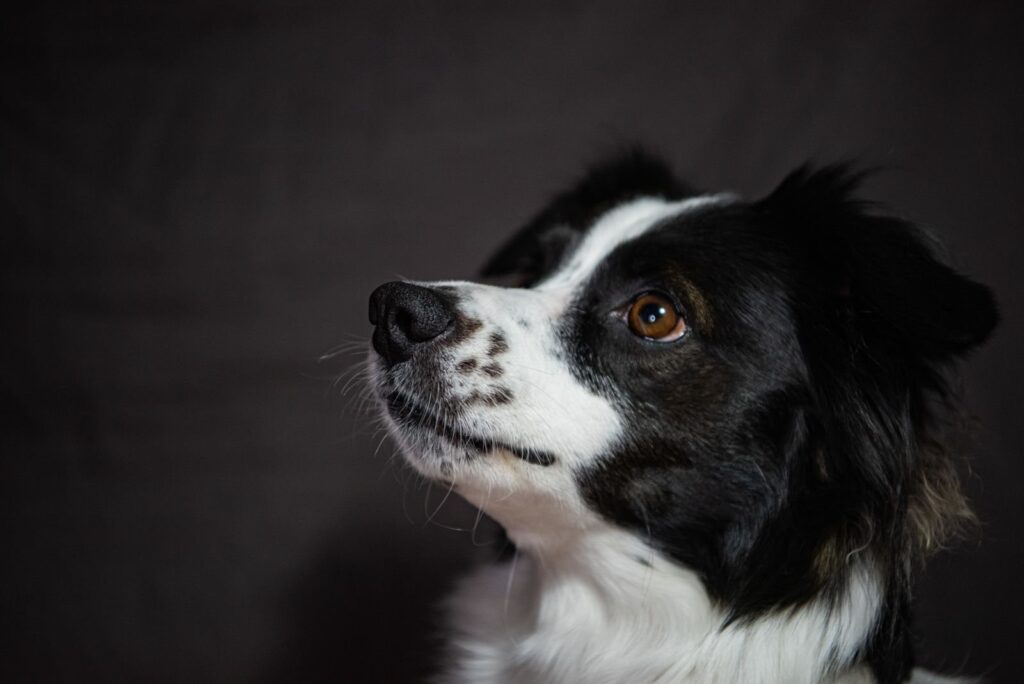
Colour moves through dog populations more freely than breed does. A black coat with a white chest appears in dozens of breeds and in countless mixes; so does brindle, and so does a dark mask across the muzzle. Saying a tricolour dog must be part Collie is like saying a person with brown eyes must come from a particular country.
Coat length is no better. It depends on a small number of genes, so a short-coated puppy can be born to a long-coated parent, and the reverse. Ear carriage changes as a dog matures, which is why some ears stand up at four months after sitting flat at eight weeks. Grooming and tail docking erase more of the outline.
What remains is proportion: leg length against body depth, muzzle length, the stop between forehead and nose, ear set, topline. Those are exactly the features a photo distorts when the camera is close, low or wide. The same constraint shapes any dog age from photo estimate: a picture fixes the outline, not the history behind it.

Mixed Breeds: The Hard Case and the Normal Case
Mixed ancestry is common, and it is where visual identification falls apart. A dog can carry a breed at a fraction that shows nowhere in its body, while a breed it does not carry at all can dominate its looks. The same 2012 review states the point directly: physical appearance is not a good indicator of breed in dogs of mixed breeding.
The evidence behind that sentence is blunt. In the shelter study it summarises, visual identification matched the predominant breed from DNA analysis for about a quarter of the dogs. A phone app working from the same visual cues has no obvious advantage over that.
Village dogs and free-breeding street dogs sit outside the system entirely. They are not mixes of registered breeds so much as populations shaped by local conditions, and a breed classifier has no honest answer for them. The best it can do is name the nearest lookalike.
How to Use a Result Without Overclaiming
A breed guess is still useful if you treat it as a hypothesis with a short shelf life. The dog breed identifier on this site is meant for that first pass, and the cautions in this article apply to it as much as to any other tool.
- Photograph the dog standing side-on in daylight, then take a head shot at eye level.
- Run two tools and keep only the breeds both of them name.
- Note the weight range and coat type each suggests, not just the breed label.
- Take the overlap to your vet as questions about screening, not as a diagnosis.
- Ask what a DNA test would add before you pay for one.
The practical payoffs are modest but real. Grooming needs follow coat type, which a photo shows directly. Exercise and joint care follow size and build, which you can measure yourself. Training follows the individual dog: the review is explicit that breed gives limited insight into behaviour, because behaviour varies widely within any breed.
What you should not do is choose an adult diet for a puppy, buy a crate, or sign up for a breed-specific sport on the strength of an app result. Those decisions cost money and can affect growth. Ask the vet who can weigh and examine the dog.
Where a Photo Result Must Stop
A photo classification is not a pedigree, not a veterinary diagnosis, and not a legal determination. Registries issue pedigrees from recorded parentage, not from appearance. Health screening rests on examination and, where relevant, on genetic tests for named conditions.
Breed-specific law is the sharpest example. The AVMA opposes breed-specific legislation and notes that it is extremely difficult to determine a dog’s breed or mix by looking, which leaves such laws vague and hard to enforce. Local rules often describe a type or a set of features rather than a breed, and a photo does not settle what an ordinance means for a particular animal.
The same caution applies to insurance, tenancy and travel. If a form asks for a breed, answer from what you actually know: pedigree papers, a DNA result, or the term mixed-breed. Do not promote an app’s guess into a record. If a rule or a dispute turns on your dog’s breed, seek local advice rather than relying on a screenshot.
FAQ
How accurate are photo breed identifiers?
No honest single figure exists. Accuracy depends on the photo, on which breeds the model learned, and on whether the dog is mixed. Judge a tool by whether it offers a range, names a type rather than inventing a breed, and admits when the picture is ambiguous.
Is a DNA test the final answer?
It is the reference point, with caveats. The same review cites a suggested range of 86 to 99 per cent accuracy for purebreds and lower figures for crossbreds, and low-percentage results are the noisiest part of any report. Ancestry gets measured; behaviour does not.
My dog was labelled a banned type. What now?
A label is not a legal finding. Breed definitions differ between jurisdictions, and many turn on appearance rather than pedigree. Keep your paperwork, ask the relevant local authority what standard it applies, and get local advice if enforcement is threatened.
Can I use the result to plan a litter?
No. Breeding decisions need known lineage and health testing, and a photo supplies neither. If you plan to breed, talk to a vet about the screening relevant to the breeds involved.
Last updated: October 26, 2026. This article is for general information only and is not medical, veterinary or legal advice. For decisions about your own health, your pet, or a legal matter, consult a qualified professional.
Sources
- American Veterinary Medical Association, Why breed-specific legislation is not the answer: avma.org
- Simpson et al., Rethinking dog breed identification in veterinary practice, JAVMA 2012: avmajournals.avma.org